
After years of adding everything from beauty products to snack foods, pharmacies have a new revenue source. Pharmacists are being asked ― and paid by insurance companies ― to monitor their customer’s health. That could include counseling them on chronic diseases, making sure they are taking their medications, and screening for everything from diabetes to high cholesterol. Although pharmacists have been doing more than dispensing pills over the past decade, this is the first time many have been able to offer such a wide range of medical services. This is due to changes in the way that pharmacists are educated along with legislative changes that have cleared the way for an expanded role.
Cynthia Hayward
The Death of the Hospital Autopsy
Autopsies ― sometimes called the ultimate medical audit ― were an integral part of American healthcare a half-century ago and were performed on roughly half of all patients who died in hospitals. Up until 1971, the Joint Commission required that community hospitals perform autopsies on 20 percent of inpatient deaths, increasing to 25 percent for teaching facilities, as part of earning accreditation. Although hospitals are still required to develop criteria for autopsies, and should “attempt to secure autopsies in all case of unusual death” and in cases of “medical, legal, educational interest,” it is rare today when a hospital has an autopsy rate of more than 5% for nonforensic deaths according to data from the Centers for Disease Control and Prevention. Some pathology experts say it is usually only about 1%.
Project Looks at Impact of Environment on Bacteria
The University of Chicago’s enter for Care and Discovery plays host to the Hospital Microbiome Project, a program in which scientists study how facility design and environmental factors affect patient-threatening bacteria. Four hospitals in the area also participate in the Chicago Antimicrobial Resistance and Infection Prevention Epicenter, one of five research programs funded by the Centers for Disease Control and Prevention. The program recently publicized its ability to slash rates of carbapenem-resistant enterobacteriaceae (CRE) infections, which the hospitals accomplished by isolating infected patients, requiring healthcare workers to treat them using personal protective equipment, and bathing them in a specialized antiseptic.
CT Scanner in 54 Square Feet? A New Option for Specialty Physicians
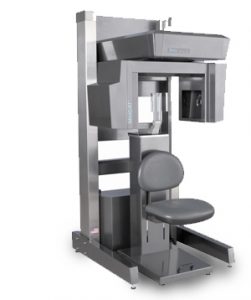 Imagine a computed tomography (CT) scanner that can be installed in a room as small as six by nine feet, weighs 450 pounds, and plugs into a standard electrical outlet. Well, for eye, ear, nose, and throat physicians it is possible to provide point-of-care CT imaging in a clinic or an operating room. The Xoran Technology’s MiniCAT™ is specially designed for head and neck imaging allowing physicians to diagnose and treat their patients faster and more conveniently. It creates high-resolution, ultra-thin CT slices (0.3 mm for temporal bones), making it ideal for scanning the sinuses, skull base, and temporal bones. The availability of a limited footprint, in-office, upright CT scanner enables point-of-care imaging without the problems associated with scheduling CT scans at the hospital’s central imaging department. A scan takes only 40 seconds to get an immediate, digitally versatile CT image on a Windows PC monitor.
The actual dimensions of the unit are 46” x 49” x 72” tall. Although it can be installed in a room as small as 6’ x 9’, a room that is 80 to 100 net square feet is recommended, or the equivalent of the size of a standard exam room. The MiniCAT scanner emits very low radiation so that it requires little or no shielding to comply with State regulations. The manufacturer can install it in a single day since its small footprint fits through a standard door frame and it weighs only 450 pounds. The MiniCAT is compatible with most image-guided surgery systems and can also be used for surgical planning and post-operative evaluations and care.
Case Study: Planning a Prototype Health Center
Northern Health Authority delivers healthcare to the residents of 20 different communities that are a mix of settlements, towns, and villages. With many of the existing remote health centers in need of replacement, Northern Health decided to develop a prototype community health center that could be replicated to serve communities of less than 1,500 people — some of which are accessible only by air.
Case Study: Planning an Ambulatory Care Facility
Prudent Health System planned to construct a new ambulatory care facility on its main hospital campus to provide space for urgent care, ambulatory surgery, and various hospital-sponsored clinics. The organization needed space to accommodate the following ten-year workload projections and corresponding clinical services:
- Urgent care center with 32,000 annual visits
- Ambulatory surgery center with 4,200 annual surgical cases
- Hospital-sponsored clinics: medicine (23,000 annual visits), surgery (15,000 annual visits), neurosciences (6,000 annual visits), orthopedics (16,000 annual visits)
In addition, Prudent Health planned a small express testing area to consolidate routine, quick-turnaround outpatient testing in a single area — including X-ray, electrocardiogram, and specimen collection — along with a small satellite laboratory.