
Hospital buildings and wings have a tendency to become functionally obsolete for specific services before they become physically obsolete — often resulting in inefficient space utilization, high labor costs, and staff and patient dissatisfaction. The cost of renovation may exceed the cost of new construction and may even take longer if multiple construction phases are required to maintain existing operations. However, this depends on the services to be accommodated, the age and general characteristics of the space, building codes, replacement alternatives, and the reuse potential of the vacated space.
OUTDATED INPATIENT NURSING UNITS
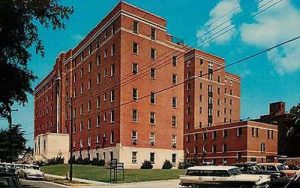 Over the past several decades growth in ambulatory care has been accommodated primarily outside the hospital— either in purpose-built outpatient facilities or in leased space in existing medical office buildings. However, acute inpatient care still represents a disproportionately large percentage of an institution’s total costs and occupies a disproportionately large percentage of a hospital’s space — often 35 to 40 percent of the total space. Unfortunately, much of today’s costly inpatient care is still delivered in facilities that were designed when multiple-bed rooms were the norm, nurses were easy to recruit, and the nurse-call system was considered high-tech. Even hospitals designed with all private rooms may still be challenged by nursing unit layouts that impede efficient staffing patterns, inadequate accommodations for high-acuity patients, inappropriate space for observation patients, a lack of isolation rooms, and accessibility for the handicapped. Many existing patient rooms do not meet contemporary standards for bed clearances, hand hygiene, patient toilet and bathing facilities, and family amenities.
The layout of a typical inpatient floor is based on a common patient room module with a fixed plumbing chase to support an en suite bathroom. All patient rooms require a window to admit natural light such that various support spaces are placed in the inner core area. As a result, changing the footprint of the patient room module may be cost prohibitive. From an operational perspective, even converting semiprivate rooms to privates may result in units with not enough beds for efficient staffing.
POORLY CONFIGURED CLINICAL DEPARTMENTS
Hospitals used to be designed with large central clinical departments instead of flexible space to support today’s integrated service models, shared staff, and high-tech equipment. For example, a large central radiology department use to provide services to inpatients as well as outpatients. Each diagnostic modality was typically designed with its own “storefront” and dedicated space, resulting in a significant amount of space allocated to diagnostic services. Over time, separate outpatient diagnostic centers were developed while inpatient use declined as lengths of stay decreased and more patients were tested prior to admission. The miniaturization and increased mobility of equipment also allowed more testing to be conducted at the point of care. As a result, many hospitals were left with significant surplus capacity and a lot of vacant space in prime locations.
At the same time, the acute care hospital continues to be the nexus for new resource-intensive hybrid imaging technologies and interventional procedures that require very different space and unique design features to accommodate the new high-tech equipment. Older surgery suites are burdened with a proliferation of 400 square foot operating rooms with adjacent (now obsolete) substerile rooms while new hybrid equipment requires a 600 square foot procedure room with a contiguous operator control room and separate space for ancillary equipment components. Undersized sterile processing space is being replaced by a large central medical device reprocessing department that can accommodate various new materials and sterilization techniques.
INFLEXIBLE SPACE FOR AUTOMATION
Today, high-volume laboratories and pharmacies look more like sophisticated manufacturing plants than clinical departments. Just about any task that once was performed at a hands-on workstation has been automated. Some hospital pharmacies have automated the entire process from electronic physician orders to individual patient cassettes ready for cart loading and delivery to the patient care unit. Autonomous mobile robots are being used to make secure deliveries throughout the hospital.
Similarly, hospital laboratories use to organize staff by testing methodology or discipline into multiple small rooms. They have now evolved into automated, multi-disciplinary, high-volume instrument-centric clinical enterprises. A visit to a hospital laboratory today reveals a varying array and number of instruments, often operating with little human intervention. The concurrent proliferation of point-of-care testing, providing immediate results, also impacts laboratory planning.
VACANT ADMINISTRATIVE DEPARTMENTS
The traditional healthcare facility had many departments involved in administration and management according to the policies established by the governing board. In response to cost containment pressures and changing skill requirements, many of these departments have been reengineered and resized into more limber organizational models leaving vacant pockets of administrative space scattered throughout the hospital. The trend today is to co-locate administrative staff in a single location so that offices and workstations can be assigned according to the immediate need allowing for the flexibility to reassign the space as programs change and staffing levels fluctuate. This prevents staff from becoming overly territorial about their space. Conference rooms and classrooms can be scheduled centrally based on daily demand thus ensuring optimal utilization. Administrative staff ― not involved in day-to-day patient care ― are also being moved offsite into less-expensive space.
Even spaces once viewed as amenities for physicians — such as a doctors’ lounge, medical record completion room, and the medical library — seem antiquated in the modern hospital with electronic health records and full-time hospitalists.
SHRINKING BUILDING SUPPORT SERVICES
Older hospitals are also burdened with a basement resembling a ghost town — vacated by building support services that have moved offsite to a shared services facility or outsourced entirely. Many hospitals still have a vacant laundry even though it was replaced by a contract or shared service decades ago. The just-in-time materials management system, supported by an offsite warehouse, remote purchasing offices, and automated point-of-use supply dispensing cabinets, has left a rabbit’s warren of unassigned spaces in most older hospitals. Central kitchens are being resized and reconfigured with the increased use of prepackaged items and offsite food preparation, and the cafeteria is being replaced by outside vendors who lease space within the hospital.
SUMMARY
Decisions regarding renovation versus replacement of hospital buildings and wings are complicated and require extensive analyses and input from a variety of professionals. However, the impact of functional obsolescence on efficient space utilization, operational costs, and customer satisfaction should not be overlooked.